How to Make Reverse-Sear Prime Rib Roast - A Step-by-Step Guide
When it comes to cooking a mouthwatering prime rib roast, the reverse-sear method is a game changer. This technique involves slow-roasting the meat at a low temperature, then finishing it off with a high-heat sear to create a perfectly cooked and incredibly tender roast with a beautiful crust. The result is a prime rib roast that is evenly cooked from edge to edge, with a juicy and flavorful interior and a crispy, flavorful crust.
While traditional methods of cooking prime rib roast i...
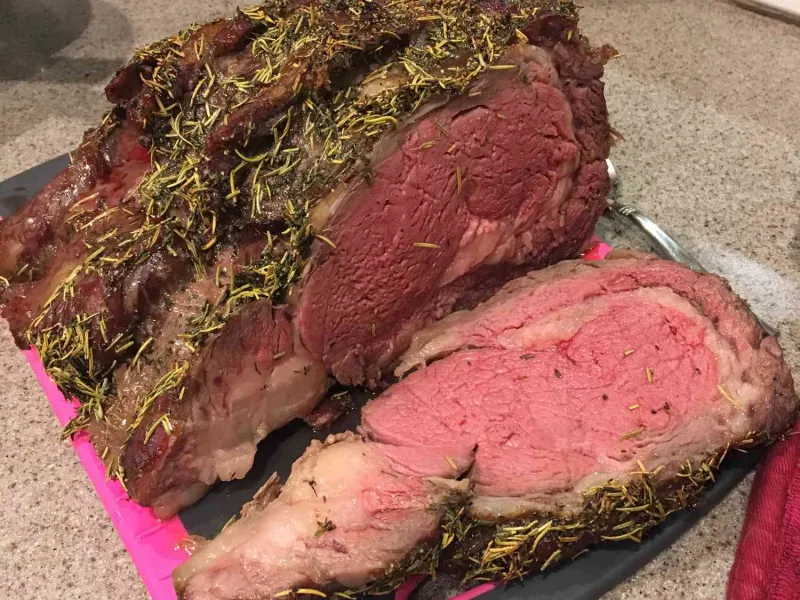
Ingredients
- 1 (10 pound) bone-in standing rib roast
- 2 tablespoons kosher salt
- ½ cup butter, softened
- 3 tablespoons chopped fresh rosemary
- 2 tablespoons chopped fresh thyme
- ground black pepper to taste
Information
- Prep Time: 15 mins
- Cook Time: 3 hrs 40 mins
- Additional Time: 8 hrs 20 mins
- Total Time: 12 hrs 15 mins
- Servings: 20
Nutrition
815 cal.
- Total Fat: 66g
- Saturated Fat: 28g
- Cholesterol: 200mg
- Sodium: 557mg
- Total Carbohydrate: 0g
- Dietary Fiber: 0g
- Total Sugars: 0g
- Protein: 51g
- Vitamin C: 0mg
- Calcium: 34mg
- Iron: 6mg
- Potassium: 741mg