How to Make Old Country Springerle - A Step-by-Step Guide
Old Country Springerle is a traditional German Christmas cookie that has been passed down through generations. These beautiful, intricately designed cookies are a staple in many German households during the holiday season. The name "Springerle" comes from the German word "springen," which means to jump or rise, referring to the way the cookies puff up during baking.
What sets Springerle cookies apart from other types of cookies is their unique texture and flavor. They are made with a...
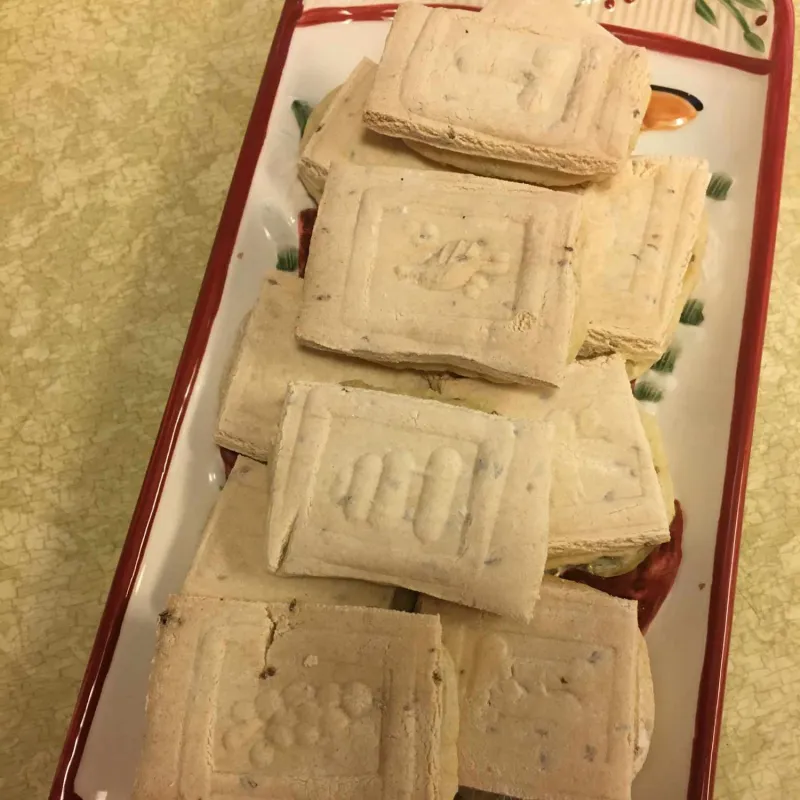
Ingredients
- 1 pound confectioners' sugar
- 4 eggs, beaten well
- 2 teaspoons boiling water
- 2 tablespoons anise seed
- 1 tablespoon lemon zest
- 4 cups sifted all purpose flour
- 2 teaspoons baking powder
Information
- Prep Time: 30 mins
- Cook Time: 30 mins
- Additional Time: 7 hrs
- Total Time: 8 hrs
- Servings: 48
- Yield: 4 dozen cookies
Nutrition
82 cal.
- Total Fat: 1g
- Saturated Fat: 0g
- Cholesterol: 16mg
- Sodium: 27mg
- Total Carbohydrate: 18g
- Dietary Fiber: 0g
- Total Sugars: 9g
- Protein: 2g
- Vitamin C: 0mg
- Calcium: 17mg
- Iron: 1mg
- Potassium: 21mg