How to Make Cedar-Smoked Baby Back Ribs - A Step-by-Step Guide
There's something truly special about the flavor of cedar-smoked baby back ribs. The delicate, slightly sweet aroma of cedar perfectly complements the rich, smoky flavors of the ribs, creating a dish that is sure to impress your friends and family at your next barbecue or cookout. The process of smoking the ribs over cedar wood imparts a unique and robust flavor that sets them apart from traditional barbecue ribs. Whether you're a seasoned pitmaster or a beginner cook, this recipe for cedar-s...
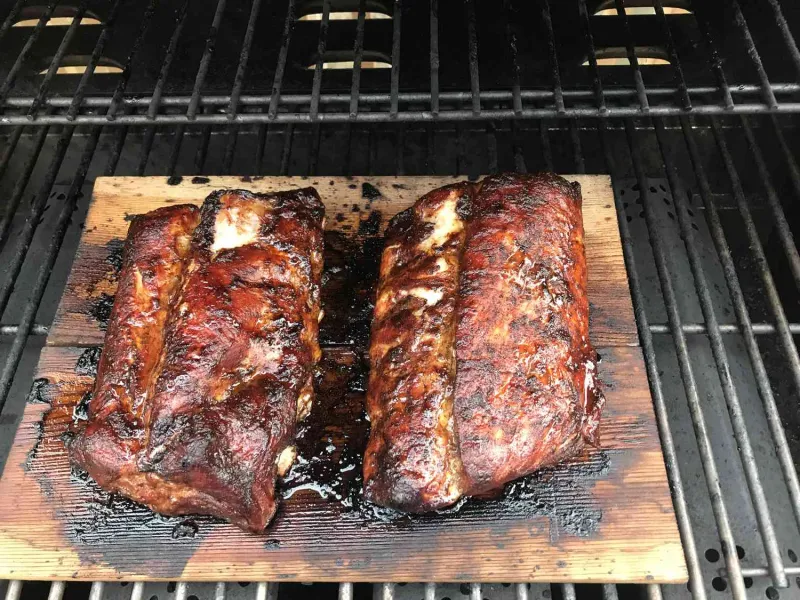
Ingredients
- 2 tablespoons garlic powder
- 2 tablespoons onion powder
- 1 tablespoon fine sea salt
- 1 tablespoon ground black pepper
- 1 rack baby back pork ribs
- 1 (6x18-inch) cedar plank
- ¾ cup barbeque sauce, or to taste
Information
- Prep Time: 10 mins
- Cook Time: 3 hrs 2 mins
- Additional Time: 9 hrs
- Total Time: 12 hrs 12 mins
- Servings: 4
- Yield: 1 rack
Nutrition
374 cal.
- Total Fat: 22g
- Saturated Fat: 8g
- Cholesterol: 88mg
- Sodium: 1923mg
- Total Carbohydrate: 24g
- Dietary Fiber: 1g
- Total Sugars: 14g
- Protein: 19g
- Vitamin C: 2mg
- Calcium: 62mg
- Iron: 18mg
- Potassium: 439mg